




Spinal Fusion: When It’s Necessary, When It’s Not, and Why It Fails
I have a confession. Despite priding myself on minimally invasive spine surgery, disc replacements, spinal cord stimulation, and non-surgical management of back pain, some of my happiest patients are lumbar fusion patients.
I wanted to write this page because fusion has become the new F word in spine surgery. Almost everyone I talk to knows someone who had a back surgery that went badly, someone who had screws and rods and kept going back for more operations. That reputation isn’t undeserved. Fusion is overused, and when it’s done for the wrong reasons, the outcomes are poor. But the conclusion that fusion is always bad is wrong. It’s a more complex story than that.
Call today to schedule your consultation
What fusion made possible
Before modern spinal instrumentation, a lot of spinal conditions were essentially untreatable. Fractures from trauma, unstable spondylolisthesis, severe deformities like scoliosis or flat back syndrome where patients are bent forward when they walk. These problems were disabling, and we didn’t have good solutions. Fusion technology changed that. It gave us the ability to stabilize the spine, correct alignment, and restore function in patients who had no other options.
The problem came when we started applying that technology too broadly. Some of that is educational. Some of it, honestly, involves financial incentives. Fusion is one of the more lucrative spine procedures, and that creates pressure, conscious or not, to expand the indications.
When fusion is appropriate
Fusion is valuable when there is true instability of the spine. This includes fractures, mobile spondylolisthesis where one vertebra is slipping on another, and significant malalignment that can’t be corrected any other way.
It’s also the right tool when the disc space has collapsed so severely that the foramen, the tunnel where the nerve exits the spine, has narrowed beyond what a simple decompression can fix. Sometimes the only way to reopen that space is to restore the height between two vertebrae, and right now interbody fusion is the best way to do that. This is an important distinction. There’s a difference between central stenosis, where the main spinal canal is narrowed, and foraminal stenosis, where the nerve exit is pinched. Central stenosis can usually be treated with a decompression alone. Foraminal stenosis from significant height loss often cannot.
There’s another scenario that doesn’t get discussed enough. Sometimes a patient needs an extensive decompression of the lateral recess, the far edges of the spinal canal where the nerve roots travel. To adequately open that area, you may have to remove a substantial portion of the facet joint, which creates instability. In those cases, adding a fusion isn’t about treating back pain. It’s about enabling a more complete nerve decompression. The fusion supports the spine so you can do the real work, which is freeing the nerve.

Where fusions go wrong
This is the part that matters most, and it’s where I think the field has the most room to improve.
Wrong indications
If someone gets a fusion purely for back pain without a clear structural cause, like instability or foraminal collapse, the outcomes are generally poor. Fusion doesn’t treat back pain the way most patients hope it will. It treats instability and it treats nerve compression by restoring space. If neither of those is the actual problem, the screws and rods aren’t going to help.
Inadequate decompression
This is the one I lecture other spine surgeons about. The purpose of most degenerative spine surgery is to decompress nerves. Patients are symptomatic from nerve compression. If a surgeon does a fusion but doesn’t do a thorough decompression, the patient wakes up with instrumented hardware and the same nerve pain they had before. The fusion enabled nothing. The screws became the operation instead of the tool. In my mind, when we use fusion as a means to achieve better nerve decompression, patients do well. When we rely on the fusion itself to make patients better, they don’t.
Technical problems
A misplaced screw compressing a nerve, poor cage positioning, inadequate reduction of a slip. These are straightforward surgical errors that lead to poor outcomes. They shouldn’t happen often, but they do.
Adjacent segment disease
When you fuse one level, the segments above and below have to compensate for the lost motion. Over time, this increased stress can accelerate degeneration at those neighboring levels, sometimes requiring additional surgery. This is the reason I prefer disc replacement over fusion in the cervical spine whenever the anatomy allows it. The data on reduced adjacent segment disease with cervical disc replacement is compelling. In the lumbar spine, I’m more conservative about disc replacement because the mechanics and pain generators are more complex, and the data isn’t as robust.
Testimonials
-

- James G.



Sagittal balance: the factor nobody talks about
There’s one more cause of adjacent segment disease after lumbar fusion that I think gets far too little attention, and that’s sagittal balance.
Sagittal balance refers to how well your head sits over your pelvis. One of the primary functions of the spine is to keep your head centered over your center of gravity so you don’t tilt or fall forward when you walk. The way this relates to fusion is straightforward: if a fusion doesn’t maintain proper sagittal alignment, the patient has a dramatically higher rate of needing additional surgery.
The technical way to assess this is by comparing pelvic incidence to lumbar lordosis. Pelvic incidence describes how much your pelvis angles your lumbar spine toward the ground. Lumbar lordosis is the backward curvature of the lower spine that compensates for that angle. When these two measurements are within about 10 degrees of each other, the spine is balanced. When they’re not, the rest of the spine has to compensate, which accelerates wear and tear.
Most of your lumbar lordosis lives in the bottom two levels, L4-5 and L5-S1. Together they account for roughly two-thirds of the curve. If you fuse L5-S1 at two or three degrees of lordosis instead of the 20 degrees the patient’s anatomy requires, you’ve eliminated most of their lumbar curve. The levels above have to make up the difference, and that strain leads directly to adjacent segment breakdown. Studies have shown that patients with a mismatch between pelvic incidence and lumbar lordosis after fusion have up to ten times the rate of requiring additional surgery at adjacent levels.
This is fixable. One approach I use is performing lumbar fusions at L5-S1 from an anterior approach, which gives better access to the disc space and allows placement of a more lordotic implant. Posterior approaches can maintain lordosis too, but it requires being intentional about it. The point is that this isn’t an inevitable consequence of fusion. It’s a consequence of not paying attention to alignment.
Are you ready to meet a leading Orange County Neurosurgeon?
A story about perspective
I had a patient once who got a second opinion with an orthopedic spine surgeon, someone I know and respect in the community. The patient came back to me and told me what the other surgeon said: “This is a bone problem, not a nerve problem. You don’t need to see a neurosurgeon.”
I found that funny, because what makes the spine unique in all of orthopedic and neurosurgery is that it really is both. The bones house the nerves. Anything we do, whether it’s fusion, decompression, or disc replacement, has to be done through the lens of how we can decompress the nerves to make the patient better. If fusion is the best way to accomplish that, it’s a great tool. If we think the fusion itself is going to do the job independent of what it enables, that’s where we go wrong.
My approach
I don’t default to fusion, and I don’t default away from it. I offer the procedure that best addresses the patient’s actual problem. For many patients, that’s a minimally invasive decompression, a disc replacement, or a non-surgical approach like spinal cord stimulation or restorative neurostimulation. For some patients, it’s a fusion, done with attention to nerve decompression, sagittal alignment, and the specific biomechanics of their spine. The decision should be driven by anatomy and pathology, not by philosophy or financial incentive.
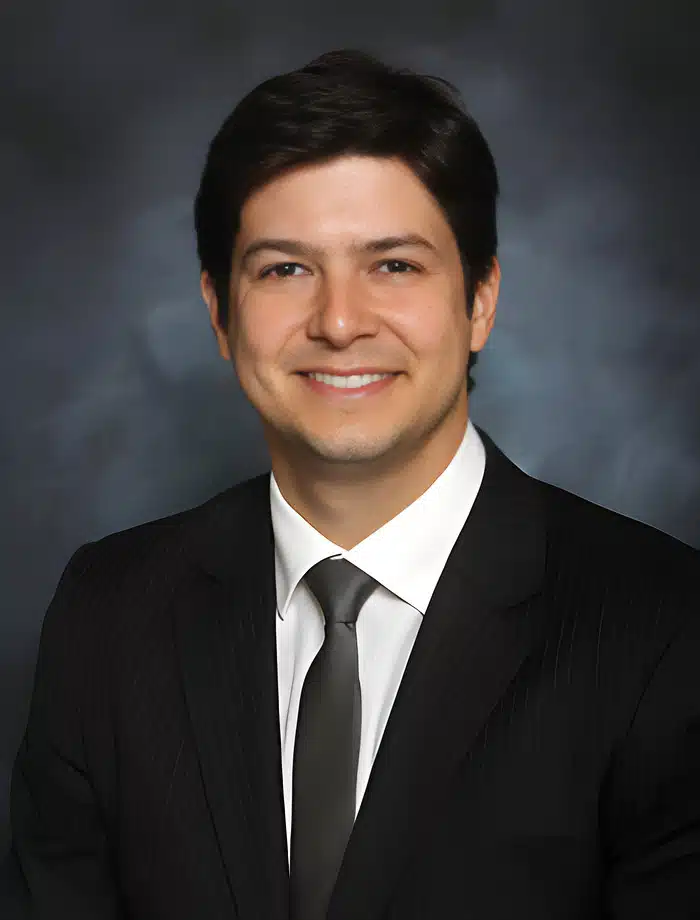
Why Choose Dr. Alexander Taghva
Dr. Alexander Taghva is a leading board-certified neurosurgeon, specializing in brain surgery, endoscopic spine surgery, as well as spine disorders. Also, he is the only spine surgeon in Orange County and southern California who offers endoscopic laminotomy surgery. Dr. Taghva:
- Graduated from Johns Hopkins University School of Medicine and completed his residency at the University of California
- Completed a prestigious fellowship at The Ohio State University in Neuromodulation and Functional Neurosurgery
- Specializes in minimally invasive and endoscopic surgery, spinal stenosis, artificial disc replacement, spinal disorders, spinal surgery revision, and other spinal conditions.
- Specializes in brain surgery to treat trigeminal neuralgia, brain tumors, pituitary tumors, and Parkinson’s disease.
- A highly-respected neurosurgeon with many years of experience, including treating chronic pain via stimulation of the spinal cord and brain
- Actively involved in medical research and the lead investigator for clinical trials on spinal cord stimulation