
Cervical Disc Replacement in Orange County, CA
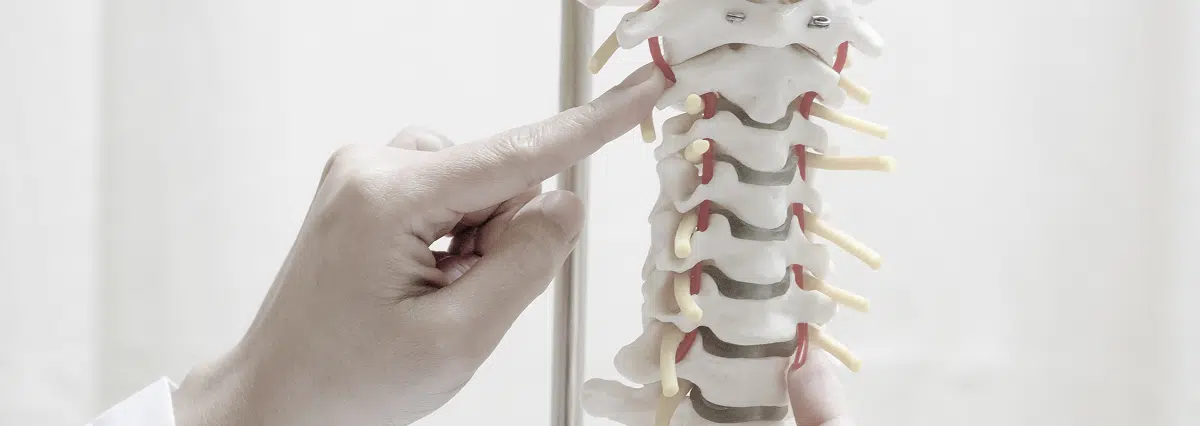
Cervical disc replacement is a surgery to remove a damaged disc in the neck and replace it with an artificial one. Unlike fusion, which locks two vertebrae together, disc replacement preserves the normal motion at that spinal segment. The goal is the same — take pressure off the compressed nerve or spinal cord — but the way the spine behaves afterward is fundamentally different.



I think of disc replacement as the option I wish more patients knew to ask about. When someone has a herniated cervical disc causing arm pain, numbness, or weakness, the standard recommendation from most surgeons is an anterior cervical discectomy and fusion — ACDF. It’s a good operation, and I do plenty of them. But for the right patient, disc replacement gives you the same decompression without the trade-off of losing motion at that level.
That trade-off matters more than most patients realize. When you fuse one level of the cervical spine, the segments above and below have to compensate by moving more. Over years, that extra stress can accelerate degeneration at the adjacent levels — a well-documented phenomenon called adjacent segment disease. It doesn’t happen to everyone, but it happens enough that I take it seriously when I’m planning an operation on someone who’s 35 or 45 or 55.
When I recommend disc replacement over fusion
Not every patient is a candidate. Disc replacement works best for:
- Single or two-level cervical disc herniations with radiculopathy (arm pain, numbness, or weakness from a compressed nerve)
- Patients without significant facet joint arthritis at the affected level
- Patients who want to preserve neck mobility, especially younger and more active patients
- Patients who’ve failed conservative treatment (physical therapy, anti-inflammatories, injections) for at least 6 weeks
I don’t recommend disc replacement for patients with significant instability, severe facet arthritis, or advanced multi-level degeneration where the joint surfaces can’t support an artificial disc. In those cases, fusion is the more reliable option, and I’ll say so.
How the procedure works

Cervical disc replacement is performed through a small incision in the front of the neck — the same approach used for ACDF. I remove the damaged disc, decompress the nerve root and spinal cord, and then insert an artificial disc into the space. The artificial disc is designed to mimic the natural range of motion — flexion, extension, and rotation — while maintaining the proper height and alignment of the disc space.
The surgery takes about an hour for a single level. Most patients go home the same day or the following morning. Usually patients require a cervical collar for 2 weeks, which means no driving during that time.
Are you ready to meet a leading Orange County Neurosurgeon?
Recovery
This is where disc replacement has a real advantage. Because there’s no bone graft that needs to heal, patients can return to activity faster. Most people are off prescription pain medication within a few days. Light activity and desk work can resume within a week or two. I typically clear patients for full activity — including exercise — by six weeks.
Contrast that with ACDF, where the fusion typically takes 3–6 months to fully consolidate and patients are in a collar for several weeks. The early recovery difference is meaningful, especially for people who can’t afford extended time away from work or life.

The devices I use
I’m experienced with several cervical disc replacement designs, including the Mobi-C (Zimmer Biomet), Simplify (Nuvasive-Globus), ProDisc-C (DePuy Synthes), and Prestige LP (Medtronic). Each has a slightly different mechanical design. I’ll discuss the options and help you understand why one device might suit your anatomy better than another.

-

- James G.



What the evidence says
Cervical disc replacement has been studied in multiple randomized controlled trials comparing it to ACDF. The data consistently shows equivalent or superior neurological outcomes with disc replacement, plus lower rates of reoperation at adjacent levels over 7–10 year follow-up periods. The FDA trials for the Mobi-C, Prestige, Simplify, and ProDisc devices all demonstrated that disc replacement patients maintained motion at the treated level and had statistically lower rates of adjacent segment surgery compared to fusion patients.
This isn’t a fringe procedure. It’s backed by robust clinical evidence and supported by national and international spine societies. The reason it’s still underutilized is partly inertia — ACDF has been the standard for 50 years, and not every surgeon is trained or comfortable with disc replacement. I am, and I think patients deserve to know it’s an option.
When fusion is still the right call
I want to be clear: I’m not anti-fusion. I perform ACDF regularly, and for certain patients it’s the best surgery. If you have significant osteoporosis, advanced facet arthritis, instability, or need decompression at three or more levels, fusion gives a more predictable result. The decision between disc replacement and fusion isn’t ideological — it’s anatomical. I make it based on your imaging, your symptoms, your age, and your goals.
Why Choose Dr. Alexander Taghva
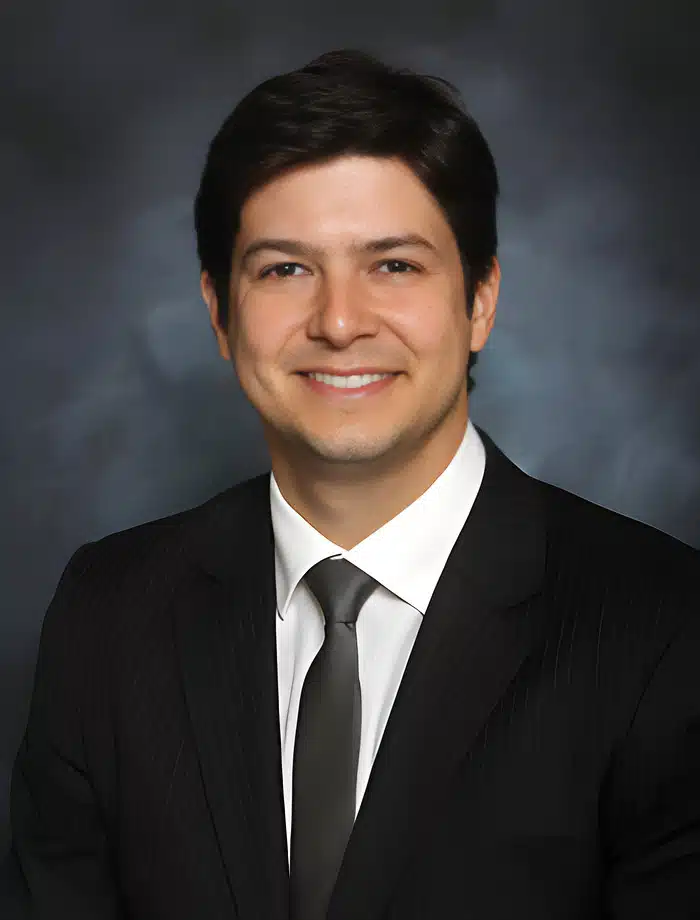
Dr. Alexander Taghva is a leading board-certified neurosurgeon, specializing in brain surgery, endoscopic spine surgery, as well as spine disorders. Also, he is the only spine surgeon in Orange County and southern California who offers endoscopic laminotomy surgery. Dr. Taghva:
- Graduated from Johns Hopkins University School of Medicine and completed his residency at the University of California
- Completed a prestigious fellowship at The Ohio State University in Neuromodulation and Functional Neurosurgery
- Specializes in minimally invasive and endoscopic surgery, spinal stenosis, artificial disc replacement, spinal disorders, spinal surgery revision, and other spinal conditions.
- Specializes in brain surgery to treat trigeminal neuralgia, brain tumors, pituitary tumors, and Parkinson’s disease.
- A highly-respected neurosurgeon with many years of experience, including treating chronic pain via stimulation of the spinal cord and brain
- Actively involved in medical research and the lead investigator for clinical trials on spinal cord stimulation